
Find the Perfect Insoles
Top Things to Keep in Mind When Buying a New Insole
There are two things that you should keep in mind when buying a new insole or orthotic arch support:
- Your Foot Arch Type: The arch of one's foot usually conforms to one of three different arch types: 1) neutral or medium arches, 2) low arches, flat feet, or fallen arches, and 3) high arches. Similarly, every insole is designed to work with one or more of these foot arch types. When browsing insoles, you should first identify what your foot arch type is (more on that below), and only browse insoles that are designed to work with that foot arch type.
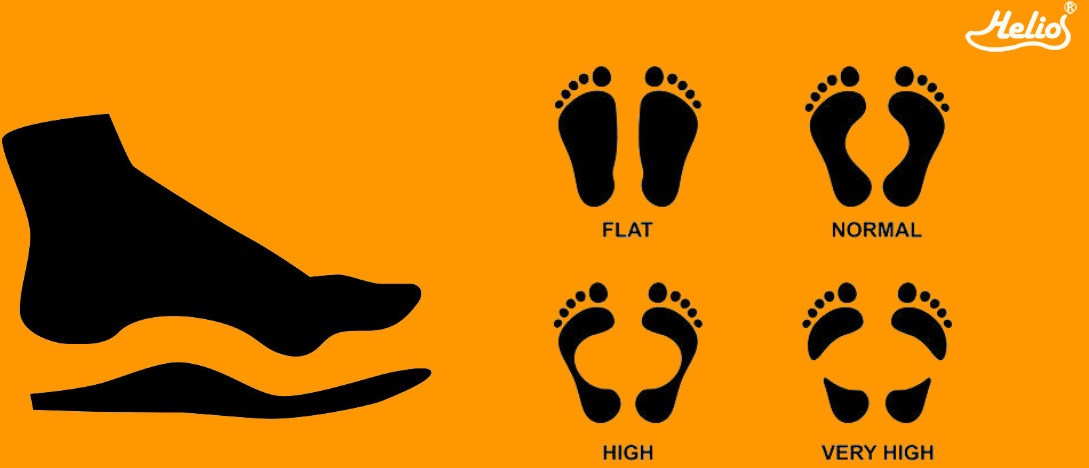
- Insole Footbed Type: In general, insoles and orthotic arch supports have one of four different footbed constructions: 1) rigid orthotic arch support, 2) semi-rigid orthotic arch support, 3) cushioned arch support, and 4) no arch support/flat cushion. The type of footbed that you need will be heavily dependent on why you are looking for an insole, and you should be sure that you browse products with a footbed type that will suit your needs.
Orthotic Arch Supports
Orthotic arch supports are insoles that feature a rigid or semi-rigid support plate or support platform as part of their design. Orthotic arch supports may also be called "orthotic insoles," "arch supports," or just "orthotics." These insoles are designed to ensure that your foot maintains a healthy, natural form all day long, no matter what activities you engage in. They do this by focusing on two main areas of the foot: the arch, and the heel. Orthotic arch supports are designed with a built-in arch support that will help prevent the over-collapse of the arch as well as a heel cup to cradle the heel of the foot and limit excessive ankle movement. Wearing orthotic arch supports will help eliminate strain on the plantar fascia, the muscle running from heel to forefoot along the bottom of your foot, which in turn will help prevent arch pain and plantar fasciitis. Additionally, orthotic arch supports will help guide your foot in making a natural motion with each step, preventing over-pronation or supination.
- A semi-rigid orthotic arch support features a support platform that is somewhat flexible. This is ideal for providing good support for the foot without the arch support feeling "too stiff."
- A rigid orthotic arch support features a support platform that is almost completely stiff. This is ideal for those seeking aggressive arch support and not recommended for first-time orthotics users.
Below is an image and some description of the components that make up an orthotic. Some orthotic insoles may not have all of the components listed below, but these are the most commonly used components to make up an orthotic insoles.

Orthotic arch supports typically require a small break-in period before you wear them all the time. If you have never worn an orthotic arch support before, we recommend only wearing your orthotic arch supports for 1 to 2 hours a day for the first week, then 3-4 hours a day for the next week. It is natural for orthotic arch supports to be uncomfortable at first but breaking in the insoles over time will help minimize discomfort. After several weeks, if the arch supports are still causing discomfort, we may want to consider trying a different insole.
Lastly, it is a common misconception that "softer is better." In some cases, such as when someone spends all day standing but otherwise has no foot conditions, this is true. However, where arch pain is concerned, it is almost always advised that you seek relief with an orthotic arch support. This is because a cushioned arch support or flat cushioned insole will not give your feet enough arch support, and you will continue to experience arch pain.
Cushioned Arch Supports
Cushioned arch supports are insoles that feature a flexible arch support made entirely from cushioned padding rather than a rigid/semi-rigid support platform. Cushioned arch supports may also be called "arch cushions." These insoles are designed to provide some support for the foot while focusing primarily on providing maximum cushioning. This is particularly useful in situations where proper support is desired, but the primary goal of the insole is to provide relief from foot fatigue. Walkers/runners seeking cushioned support tend to prefer cushioned arch supports over orthotic arch supports, and people who spend all day standing but otherwise suffer from no foot conditions benefit most from cushioned arch supports.
Cushioned arch supports still provide support for the feet through a built-in arch support, and many also feature a heel cup for stability. However, in almost all cases, the level of support you will receive from a cushioned arch support is much less than that of an orthotic arch support. If you suffer from arch pain, over-pronation, or supination, we advise that you seek an orthotic arch support instead. If you suffer from foot fatigue or shin splints, or if you have tried a semi-rigid orthotic arch support and found it uncomfortable, a cushioned arch support is the right type of insole for you.
- Athletic & Sports Insoles
Athletic or sports insoles are often more technical in their design than other insoles. These are insoles engineered for the functions of a specific sport/activity and the needs of an individual involved in that activity. For example, runners typically require good heel & forefoot padding as well as a foot support system to assist with their heel-to-toe (gait) movement. Cyclists require a stiff and compact insole that will work in tight-fitting footwear.
- Flat Cushions/Replacement Insoles
Flat cushioned insoles are insoles that feature no arch support whatsoever. They are also called "replacement insoles." These insoles are not designed to provide any foot support, but rather are meant to simply line the bottom of a shoe as a replacement for the sock-liner that comes in factory-new footwear.
Replacement insoles come in many forms, with some offering a cushioned top-coat and others not. Replacement insoles come in foam, leather, wool, cotton, gel, and more materials to suit a wide range of user preferences. Replacement insoles tend to be thinner than all other forms of insoles.
Shoppers who want to replace a worn-out sock liner or switch to a different material for their shoe insoles, but who do not want any foot support, should look at purchasing a replacement insole.
- Gel Insoles
Gel insoles are best known for their excellent shock absorption properties. While gel tends to be heavier than other insole materials, those who perform high-impact activities such as running, walking, and court sports tend to prefer insoles featuring a gel construction or gel padding. This is because the gel will absorb much of the impact shock from these activities, helping decrease foot fatigue and increase energy return.
- Heat-mouldable Insoles
All insoles will conform to your foot over time as you wear them. Heat-moldable insoles, however, are designed to speed up this process. By heating the insoles for a short time in the oven and then standing on the insoles while they cool, you are able to meld the insoles to your unique foot shape instantly. Anyone desiring a truly customized fit as quickly as possible should consider purchasing a heat-moldable insole.
Common Reasons for Buying an Insole & Recommended Products
Below are several of the top reasons we have seen for why our customers are buying insoles, as well as tips for buying an insole best for that reason.
- Plantar Fasciitis & Arch Pain
When seeking relief from plantar fasciitis and foot arch pain, you'll want to look for an orthotic arch support with good cushioning. A foam orthotic arch support with either a semi-rigid footbed or rigid footbed works best. For first-time buyers, we recommend trying a semi-rigid orthotic arch support for a good combination of support, flexibility, and comfort. For those who have worn orthotics before and are seeking more aggressive arch support, we recommend choosing a rigid orthotic arch support. If you have room in your shoes, a layer of foam cushioning will help further alleviate pain, otherwise look for low-profile insoles to accommodate tighter-fitting footwear.
- Over-Pronation
Pronation is natural and refers to the natural inward roll of the foot when taking a step. Over-pronation deals with the condition of the foot rolling too far inwards when taking a step, which can often lead to instability and foot pain. To correct over-pronation, seek either a semi-rigid or rigid orthotic arch support to help keep the foot aligned and supported at all times. The combination of arch support and heel support that you will find in an orthotic arch support will naturally help to correct over-pronation. For first-time buyers, we suggest a semi-rigid orthotic arch support; for those seeking aggressive arch support, we recommend a rigid orthotic arch support.
- Long Standing
Anyone who spends long periods of time standing typically suffers from foot pain. To prevent this, seek a cushioned arch support, which will help keep the foot gently supported throughout the day and relieve pressure off the foot. Foam insoles work best to alleviate pain from standing.
- Morton's Neuroma
Morton’s Neuroma is a burning, tingling, or sharp pain felt in the forefoot and is typically caused by a compressed or irritated nerve in the forefoot. If you suffer from Morton’s Neuroma, you will want an insole or insert with a metatarsal pad for your footwear as well as additional forefoot padding to relieve pressure on the irritated nerve.
- Metatarsalgia & Ball-of-Foot Pain
If you suffer from metatarsalgia or another forefoot pain, you'll want to choose an insole that features a metatarsal pad and plenty of top-coat cushioning. A cushioned arch support tends to be the best option here, but we do offer semi-rigid and rigid arch support options for those seeking more support for their foot
- Supination
Supination, or under-pronation, refers to the outward roll of the foot when taking a normal step. The foot is designed to roll inwards slightly during each step ("pronation"), so the outward roll of the foot often leads to pain and discomfort. To prevent supination, seek either a semi-rigid or rigid orthotic arch support to help keep the foot aligned and supported at all times. The combination of arch support and heel support that you will find in an orthotic arch support will naturally help to correct supination by guiding the foot's movement towards natural pronation. For first-time buyers, we suggest a semi-rigid orthotic arch support; for those seeking aggressive arch support, we recommend a rigid orthotic arch support.
- Running, Walking, & Shin Splints
Runners, avid walkers, and those suffering from shin splints often need a combination of flexible support and shock absorption in their insoles. For this, seek either a cushioned arch support or a semi-rigid orthotic arch support that is either a full gel construction or features gel padding at the heel and forefoot. Cushioned arch supports and semi-rigid arch supports will allow the flexibility you'll want with an active activity, and the gel padding will absorb impact shock to reduce fatigue on the feet and knees.
- Diabetes & Arthritis
Those suffering from diabetes and/or arthritis will need an insole that will be gentle on the feet, assist with circulation, and minimize the abuse and shock that the feet naturally suffer every day.
- Heel Spurs & Heel Pain
If you suffer from heel spurs or other heel pain, you will want to seek an insole with plenty of cushioning and padding at the heel of the foot. There are a wide range of products for this, from full-length insoles to 3/4-length insoles to heel insert pieces.